Discussion on 2025/09/18
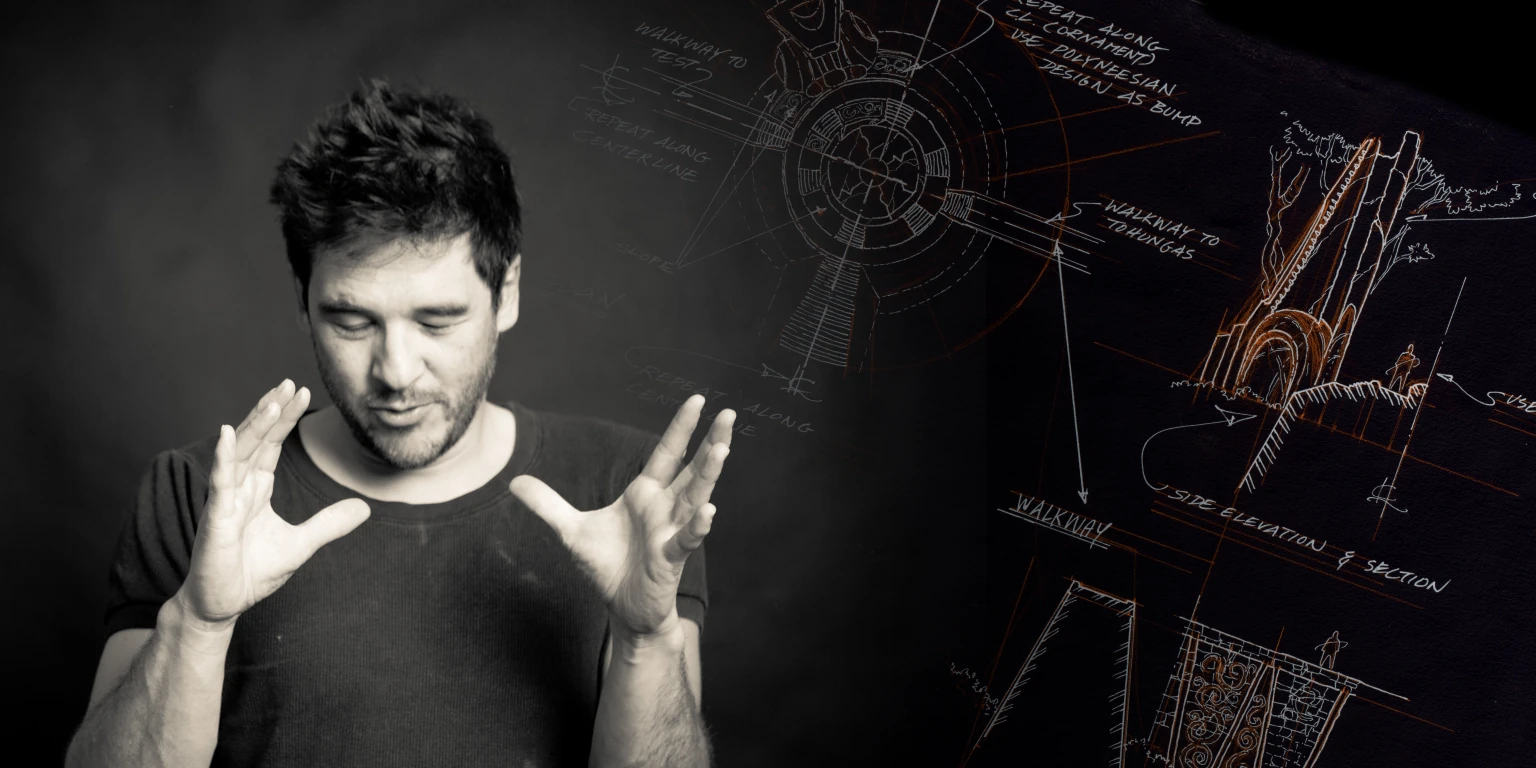
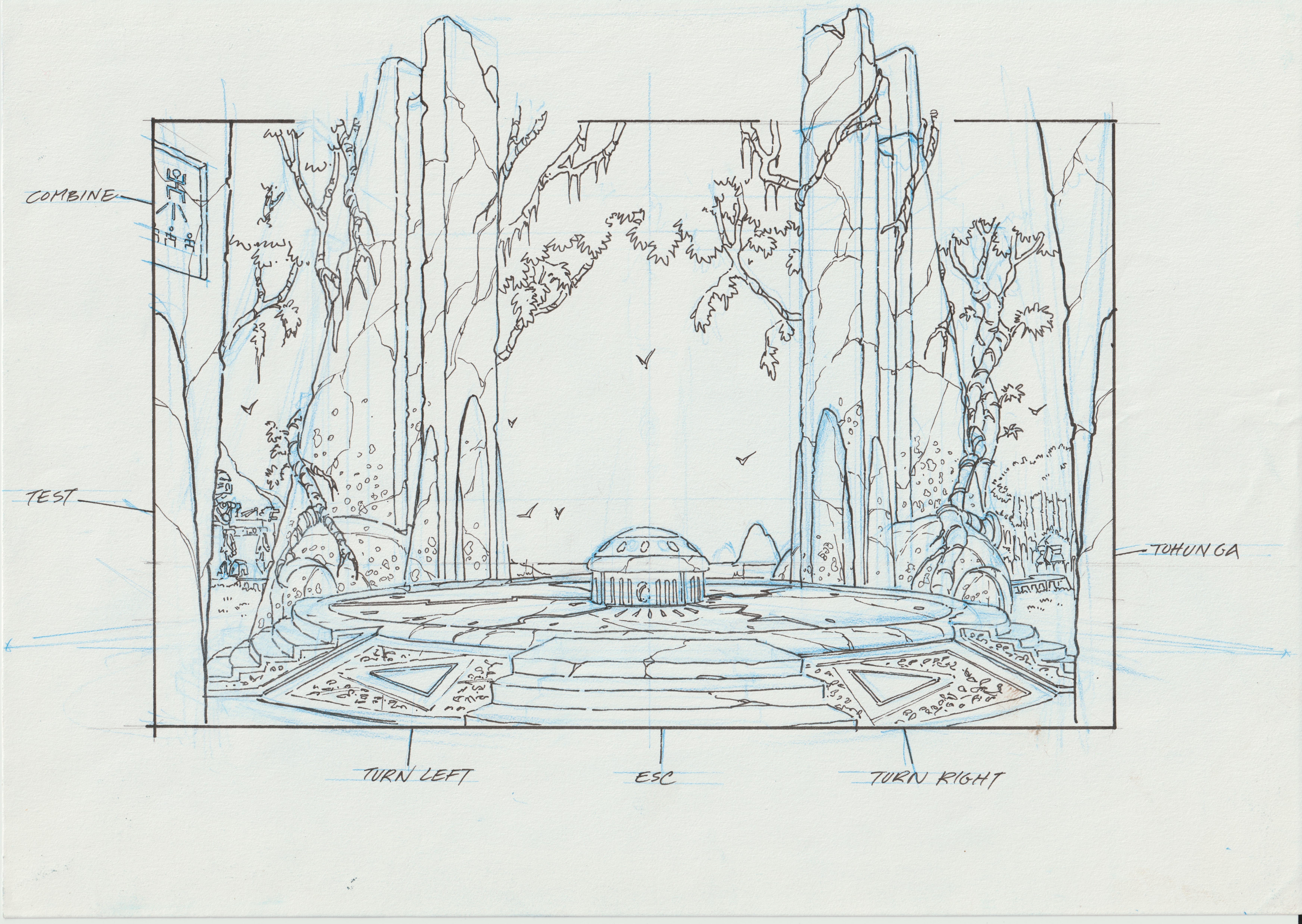
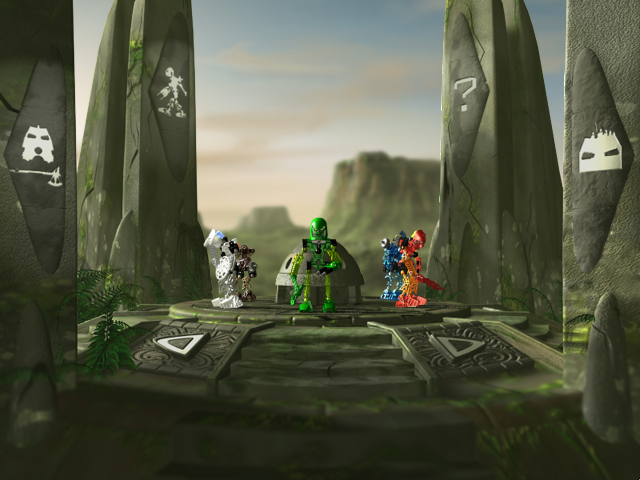
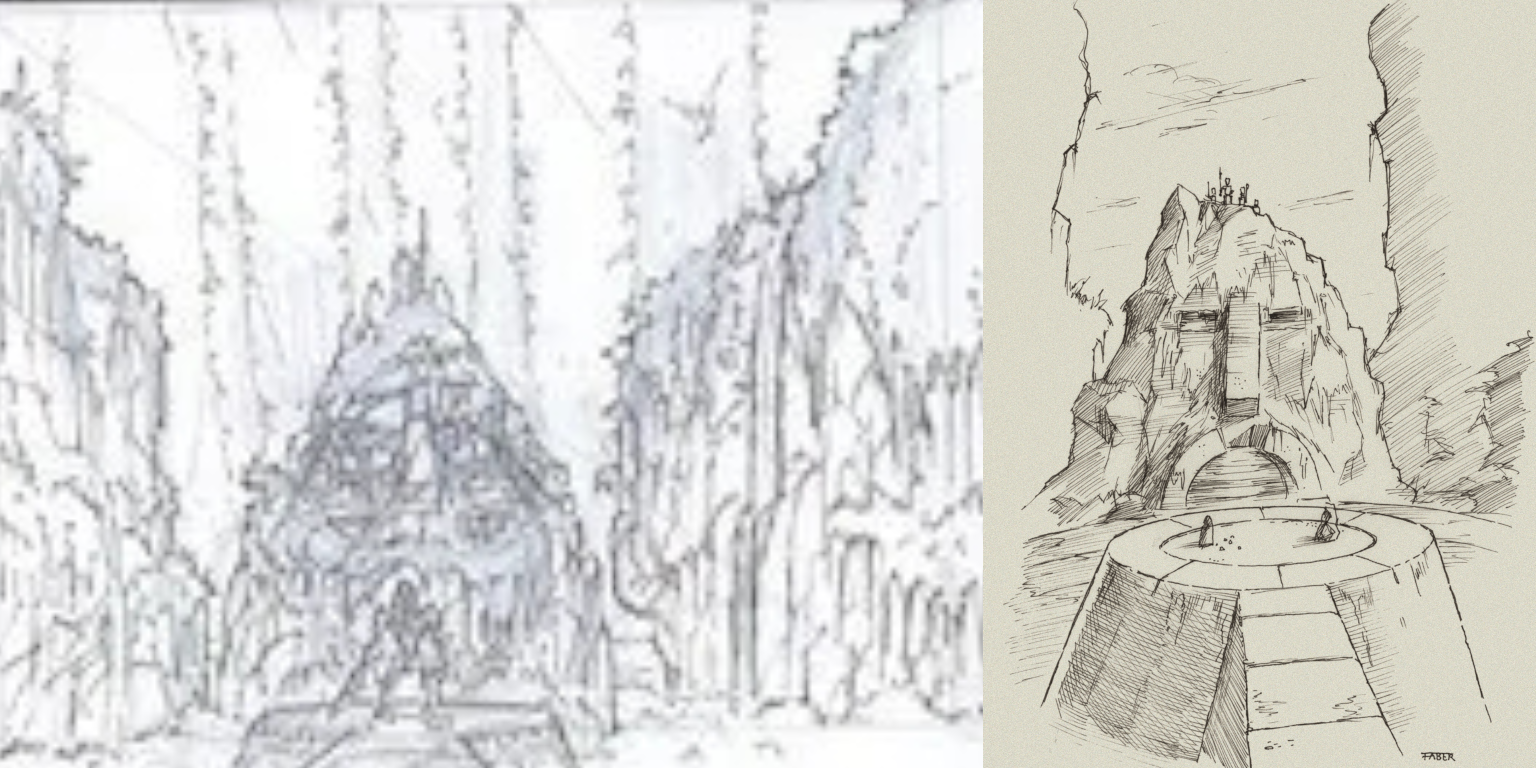
Kun Chang is a filmmaker, director, and artist who co-developed several concepts at LEGO. Later, he freelanced for Ghost, contributing art and design for the initial launch of BIONICLE in 2001. His work includes the storyboards for the six Toa short films, and design/production art for the temple later known as the Kini-Nui.
Presented below is a edited version of this discussion. The full version is also available: Download transcript (PDF)
All the BIONICLE art Kun has shared can be found on the 2001 concept art page.
K = Kun Chang, E = emily (BioMedia Project)
Artistic Background
E: How did you get your start as an artist? What pushed you in that direction, how did you get into the industry?
K: I’m born in Denmark. I started drawing from an early age – I used to do graffiti and stuff like that. More or less professionally! I actually got paid to do graffiti. I realized early I wanted to go to film school, but it was hard to get into the Danish film school because you had to have professional experience. I decided to get a bachelor’s degree, so I got a bachelor’s degree in law & economics… I kept drawing, and had three pretty difficult years, but then managed to get a degree. Then I worked as an illustrator and did really well, actually!
During that time, I did a short film that got into a lot of festivals and stuff. That also got me into film school in England. I studied at the Royal College of Art, in a program called ‘Design for Film and Television’. When I finished, the first job I was offered was from something called Middle East Broadcast Service – which I assume must be Al Jazeera or something like that, I’m not quite sure. I said no to that because I just couldn’t see myself doing TV sets.
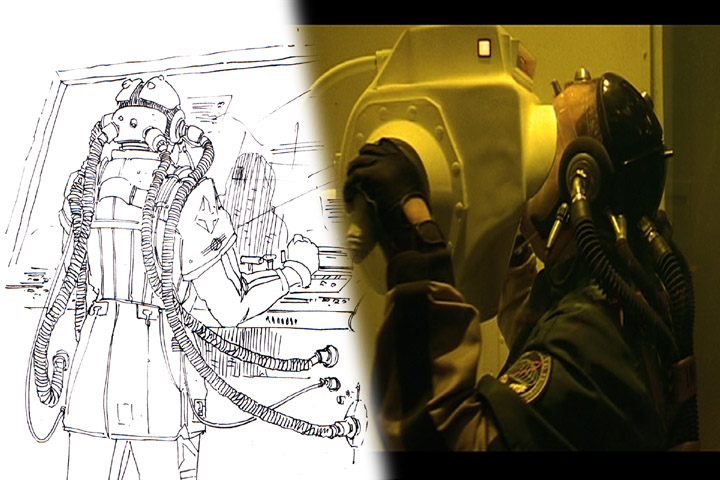
Then I went traveling, and when I got home they said ‘someone’s been trying to get a hold of you, from The Fifth Element!’ And obviously I didn’t know what The Fifth Element was at the time, but I knew it was a big science fiction project. I called them up and the job was still available, so they hired me, and I worked on The Fifth Element as a… Junior Illustrator, I think the title was. When I finished that, I kinda wanted to go back to Denmark, so I went back to Denmark for quite a while. I had been hired out of film school to work on a Danish animated feature film. I art directed that film!
When I finished it, I went back to London for a couple of weeks because I was trying to figure out what to do next. I was invited into my old film school, so I spoke to some of the students. [While I was there] my teacher said, ‘Well, what do you want to do?’ and I was like, ‘Ugh, I don’t know! The only thing I’d be interested in is maybe Star Wars,’ and she goes, ‘Oh, Tony works on Star Wars!’ This guy Tony had been very positive about my work, so he said ‘Yeah, sure, you should apply!’
So I applied to Star Wars. And I realized that everyone I knew and their mom had applied to Star Wars. I was sure I wasn’t going to get it. I suddenly got a phone call, and it was like ‘Hey, you got the job!’ And I was like, […] okay! I worked as a concept artist on Star Wars for nine months or so. I was supposed to be a Junior Draftsman – I drew some of the props, and I drew Anakin’s racer. I did all the construction drawings for them.
Then I had some pretty serious back problems, so I actually had to stop for a while. Afterwards, I worked on The Fabulous Thunderbirds, which changed director and became something completely different – and really boring! But the original was really interesting. I got an opportunity to do a short film. I had realized in film school that I really wanted to direct, and it was hard to direct when you get opportunities like Star Wars. I actually quit my job on The Fabulous Thunderbirds and said ‘I’m going to do this documentary for free for the BBC’. They were like, ‘You’re crazy, no one creates a film for free!’
LEGO Projects
K: I did the short film for BBC, and I met a girl from Canada, and so I moved over here. When I moved, a friend of mine started working for LEGO. LEGO had gotten the rights to do Star Wars, but they got no info. Everything was secret on Star Wars! They had no idea what to do. They flew me over several times – about once a month or something like that – for a week or two [at a time], I forget how much it was – to work on… I think they called it Droid Developer Kit. Where you could build R2-D2 and a lot of other things. I clearly didn’t charge enough for it, I had no idea how valuable I was to LEGO at the time! I had no clue what was going on, but I was like the inside man to all the Star Wars development.
When I finished that, a lot of other work came along. They were working on a little video… and the top project at LEGO at the time – this might still be the case – is a set called supercar. They wanted me to work on that. I got involved, and I got to meet some of the people who were involved in the marketing as well. Christian Faber –
E: Oh, yeah. Because he would have been art director for Technic at the time, right?
K: I’m not quite sure what he did, the company was somehow… the company he worked for [Advance], the company did a lot of the stuff for LEGO. We had these pretty crazy ideas! Kind of funny to see it now… one of the ideas was to actually build a car for Formula 1. Which I know they’re now doing at the moment! The idea was basically to enter the Formula 1 race and pretend that we were a team. Then we’d do this big reveal of the car, and it was actually just a LEGO car. We had all kinds of ideas of putting tracks in the middle of the town, actually painting tracks in Monaco – stuff like that. That didn’t happen, but I just noticed I did a lot of drawings for that as well.
BIONICLE Story Meetings and Initial Development
K: This part of LEGO, it was a part called Darwin. They spent a lot of money on interactive stuff. They did CD-ROMs, and all kinds of things. I think they shut it down, I’m not quite sure what happened. The people who were there started a company called Ghost. There were like, four people from Darwin, and then a producer. One of those four people was my friend [Aksel Studsgarth]. Actually he used to be the general manager of Ghost.
One of the projects they got was BIONICLE. I’m not quite sure how I got involved, because I was also involved in the discussions in Billund. I remember being at meetings where we were talking about this. There was a company called Skryptonite that came in and they were talking about all the origin stories behind these, and how they were going to write them. Maybe this happened after [Darwin closed and Ghost formed]?
E: Do you remember when you were first handed, like, ‘here’s this concept of BIONICLE’? Or what was the premise, what were they trying to figure out in these meetings?
K: This is something I do remember! LEGO at the time wasn’t doing very well, I think you probably know. There’s several case studies… and I haven’t really looked into it, but I realized afterwards BIONICLE was the thing that actually turned it around. The issue that LEGO had was that they didn’t have any toys that people would pick up for birthday parties. They needed something that was $9.99. When people went to Walmart, it could stand somewhere close to check-out, and you could just pick one of these things up. They noticed kids were huge collectors of things – Pokémon was really big at the time. The idea behind it was to create something similar to Pokémon. Something that kids could collect.
The whole idea of ‘create a toy that’s cheap, then you collect all six of them, and that is a success’. And of course, further! That was the basis of it.
I do remember some of the discussions about the whole like… I mean, now, looking back, I understand why they got in trouble with the…
E: The Māori tribes.
K: yeah, Pacific tribes. It was clearly stolen, a lot of stuff, from indigenous peoples in the Pacific. But I don’t think I was involved in more than one or two of those story meetings. What I do remember is, Christian had gone away for a summer and played with some LEGO and came up with this stuff.
We were doing these six films and I don’t think anyone really expected it to be as big as it was. It was just six little figures! But it was trying to hit at a certain market that LEGO hadn’t explored before. The other thing that happened too is that… I remember when I started at LEGO, a lot of the bricks didn’t seem like *my* kind of LEGO. Not the LEGO that I remembered from when I was a kid.
I think this mix of Technic and other LEGO – this was the other issue LEGO had. Because of video games – it’s funny because it must’ve been at the very beginning, like the first PlayStation – the issue they had was a lot of kids… kids used to play with LEGO, and then when they got to a certain age, they would start playing with LEGO Technic. And they’d play with Technic until they were, like, 12. The reason LEGO wasn’t doing well was suddenly they stopped playing with LEGO at a very early age. There wasn’t a link, kids would play with LEGO, and then they’d play video games. There were a lot of little things like that. I guess that’s probably why they started mixing the two [LEGO and Technic] together.
But I think it was really this idea of making smaller toys that you could pick up as a birthday present.
E: Makes sense. And BIONICLE had that media integration, too. Of course they were planning the video game, and you worked on the CD-ROM that came with a lot of the original sets.
K: Yeah, which was this tiny little one! Like, I don’t think anybody can even play it anymore.
E: Yeah, its a challenge to get it running in this day and age, for sure.
K: I think I saw someone online who had scraped the videos. [laughs]
E: Yeah, yeah, there you go! [laughs]
Ghost & BIONICLE
E: So you were in these meetings in Billund talking about the story and direction, and I guess you had to take that away and translate it into what you were actually working on? These animations, end-product, right?
K: The characters were already made.
E: Ok, so that was all defined at that point.
K: Christian had a pretty clear idea, each one of them had their element. His idea for each of the stories was very clear from the beginning.
I just remember I spent like, two, three weeks at Ghost doing drawings for the first six short films. Christian was directing. I did all of the designs and storyboarding, and everything else. We had four guys who were there, who did all the 3D for it. That was one of Ghost’s first projects, and afterward they did a ton of BIONICLE, which I wasn’t involved in. They eventually did stuff with Industrial Light & Magic, and so on – they became quite a big company.
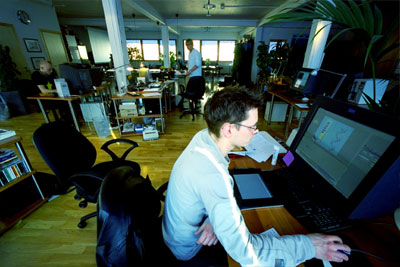
There were probably just three, actually? The three founders of Ghost. And I think this guy Bo [Nielsen]. For some reason I think there were four but maybe it’s because there were four tables. It was a very small outfit.
E: Four tables… it was just like, a little room with just four tables?
K: No, they had a decent amount of room! But Ghost originally started in a camper valley.
E: Oh wow! [laughs]
K: And I think their main client was LEGO. Before that… they were very ambitious, and I remember, when I first moved over [to Canada], I actually got an opportunity to open a digital studio for LEGO over here. And I was like ‘that’s not what I want to do’. Y’know. Probably a bad decision [laughs]
E: I get it! Not wanting to stay stuck with the one company, one place, forever.
K: Yeah! It’s also like, I’m interested in directing, and I’m also interested in taking a vacation every once in a while, not run a company, you know?
E: [laughs] right.
K: But I probably would have been wise to say yes. Just like I was offered a part of Ghost at the time. And I said, ‘I’m in Canada, what the-?’ Should have said yes to that one too.
[both laugh]
K: I think the thing with the temple at the end… I don’t even remember if it was in the video, I’ll have to find the drawings… there were all kinds of inscriptions and weird stuff. Which was just kind of… made up. [laughs]
E: Yeah you can almost barely see some of the inscriptions and stuff on the temple in the animations in the CD, but it’s all so low-resolution, because of the time.
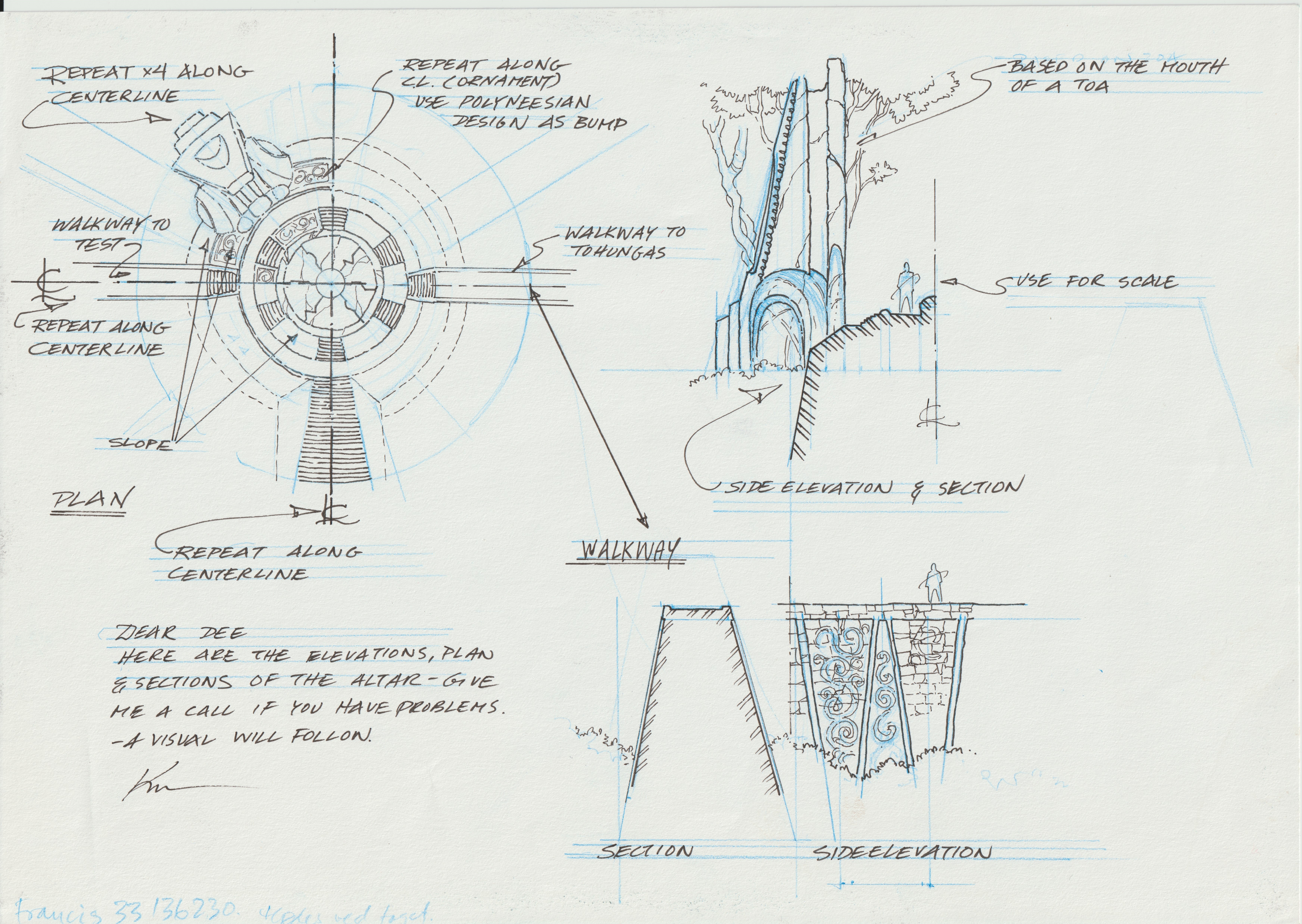
K: And we didn’t have enough time to do all of that! It was literally four guys making the whole thing.
E: The art that you posted on your site, it was cool to see, when that came to light. Because it was sort of like ‘Oh, you can kind of see in the disc, you can see the temple from this angle but its not quite clear how this part works’. Seeing this whole production art layout, like, ‘Here’s how the whole thing is designed! And here’s how the walkways work!’ It was like seeing things in a new light that people hadn’t been able to see before.
K: I don’t even know where it is [on my portfolio]… oh! The very last drawing there. I have a lot of drawings like that somewhere.
E: If you can find them, people would be thrilled to see that.
K: I’m surprised that someone even figured out that that’s a BIONICLE thing! [laughs]
E: [laughs] I think it was someone looking through the credits on the CD-ROM, and then looking for portfolios.
K: Oh they had a credits there? Okay. I’m sure I have a lot more than that. I did spend about a week on the project, or two. Maybe more? Two weeks, at least.
E: You said you did some of the storyboards for the animations?
K: Yeah.
E: Was that like, you were given a prompt, ‘okay, we have to have the fire guy doing his lava boarding’ – or are you making that all up as you go?
K: It’s a combination of it. Christian was there, as far as I remember, pretty much all the time. He draws too! But I honestly don’t remember.
I heard somewhere BIONICLE figures are worth quite a bit of money now. I have one of them somewhere… didn’t keep the box or anything. Probably my kids have taken it apart.
[both laugh]
Current Work
E: To wrap things up, is there any recent work of yours, stuff you’re particularly proud of, stuff that people who are interested in your design work, your artistic style, might want to check out?
K: On my website, I have more recent work. There’s some stuff I’m not allowed to talk about, which I’m very proud of.
E: Ah, ok. Forthcoming, right?
K: No, it’s actually something I’ve done in the past. I’ll never be allowed to talk about it.
E: Ohh… that’s so sad.
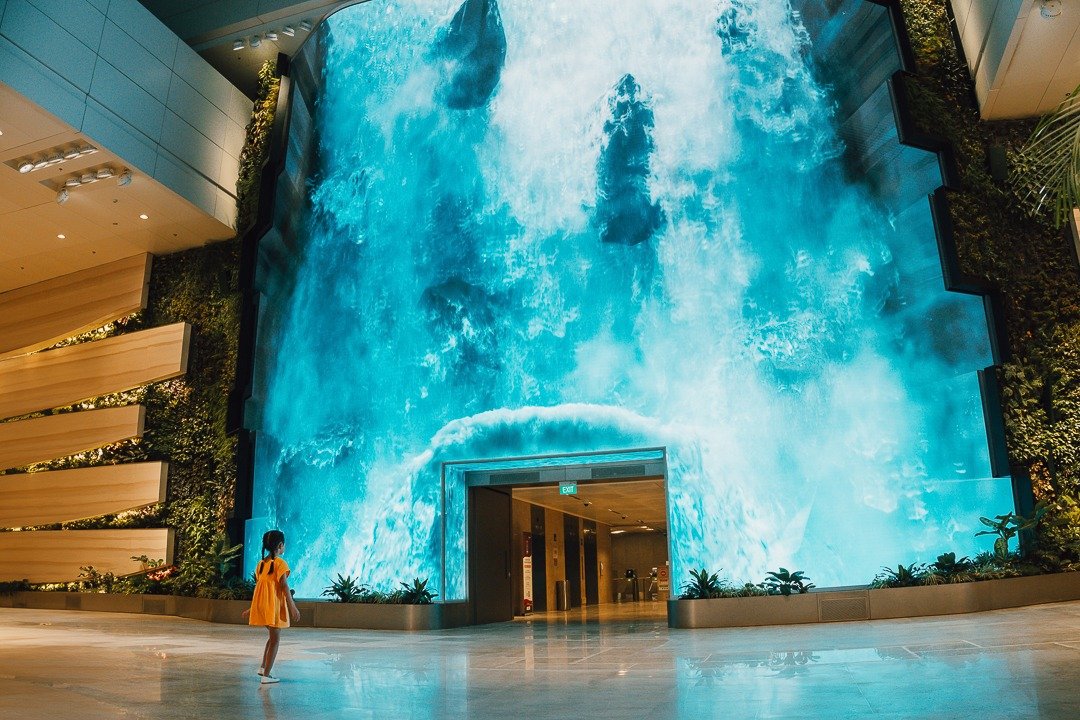
K: Unfortunately, its part of the work I end up doing. One of the things I’m proud of lately is the thing I did for Changi Airport. You can find all these things on my website. I did kind of a digital waterfall where the water’s actually dancing. One of the reasons I moved to Canada was because I wanted to direct, so I’ve mostly been concentrated on directing more than doing art. I’ve been doing commercials and short films and documentaries. A lot of multimedia projects. If you go on my website, one of the things that really enjoyed doing was an immersive circus show, is how I would describe it. I’m working on an immersive, interactive zoo at the moment. In a couple of months, that’ll be out.
E: A digital… you’re visiting it virtually, type of thing?
K: You’re there, but there are no animals. Everything is actually interactive. So you learn a lot about animals by recreating things. They do all things like that. It’s quite interesting.
E: Sounds like a cool way to make access to that sort of thing a little easier for when you’re not living in the area of a zoo.
K: It’s actually connected to a real zoo as well, and a number of other things and experiences. We’ll see what comes out of it. I’m not really allowed to talk about that [any further] until it’s actually out there.
Final Thoughts
K: That’s pretty much it. It’s like… at the time, and even years after, it didn’t seem like a big deal. Something that maybe is a fun anecdote is that I worked with a 3D artist years later and he had grown up on BIONICLE. And he knew all of these… [gestures about the fact there are a lot of BIONICLE characters]. One, it made me feel really old. [laughs] But secondly it was also, like, oh, that’s kind of cool! It was only later I realized the impact it actually had. Because I wasn’t at the age I was actually playing with LEGO. I saw some of the stuff that Ghost did – little videos and stuff. But I didn’t really follow it more than that.
E: Obviously it wasn’t a Star Wars level thing, but for the people that it reached, it was, I think, a lasting impact.
K: I totally understand! Obviously, I had things when I was a kid that had an impact on me. At the time, it was just like, it seemed very small. I don’t think anyone really expected it to be as big as it was.
E: It was kind of a shot in the dark.
K: It was. I think that’s why six little figures, out of everything that LEGO does, it’s not a big thing. The projects I worked on were these super expensive sets that you could buy. You could buy an R2-D2 with a robotic brick inside, and all kinds of other things. And they would probably cost $100. I don’t think this is where LEGO thought they were gonna make their money at the time. It was just funny. It was a skunk project, you know? Skunk works.